
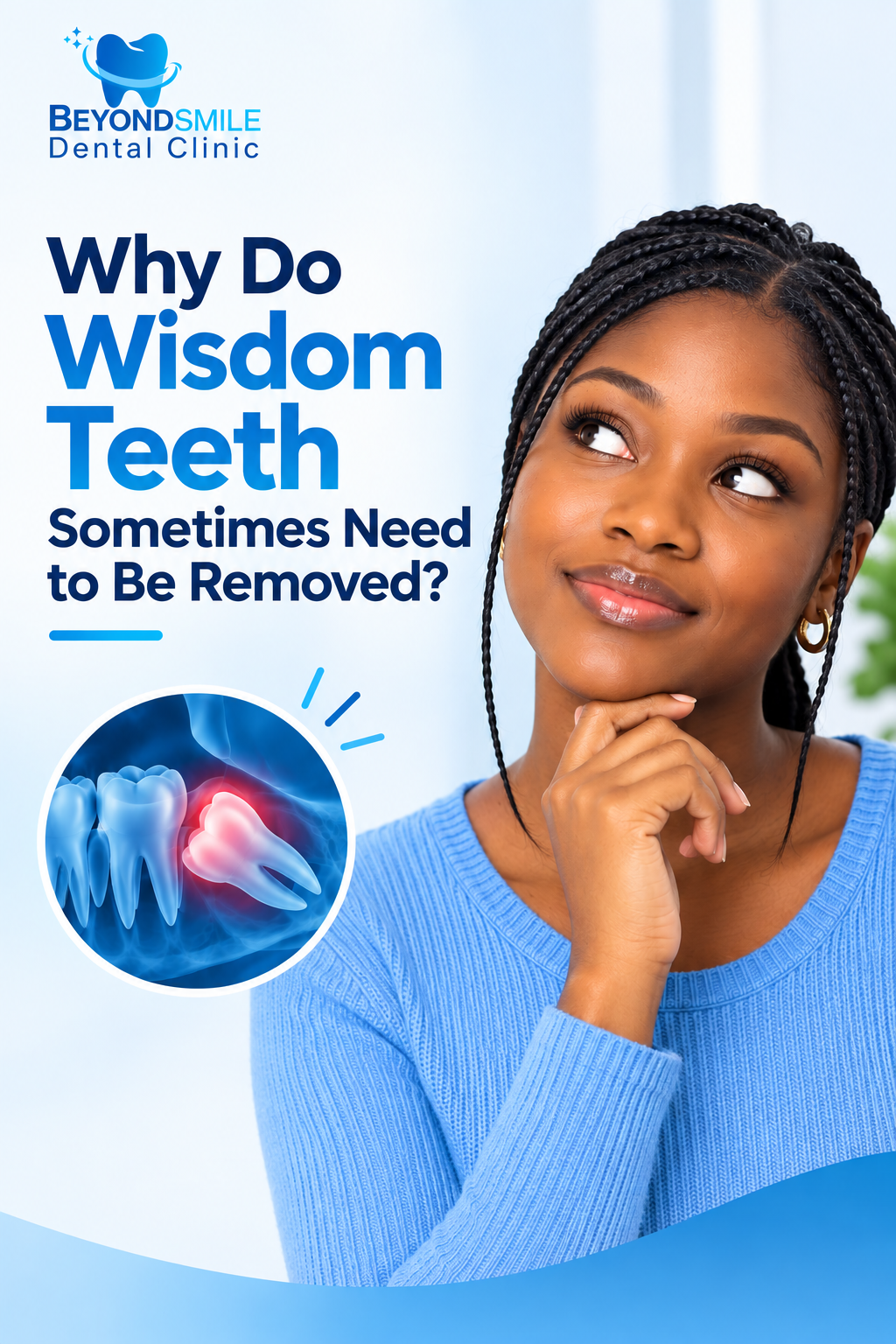
Wisdom teeth are the last set of teeth to develop at the back of the mouth. They usually begin to appear during the late teenage years or early adulthood. Some people have enough space for their wisdom teeth to grow normally, while others may experience problems that make removal necessary.
But not every wisdom tooth needs to be removed. A dentist will usually recommend removal based on the position of the tooth, available space, symptoms, and your overall oral health.
What Are Wisdom Teeth?
Wisdom teeth are the third and final set of molars at the back of the mouth. Most people can develop up to four, two at the top and two at the bottom.
When there is enough room and they grow in properly, wisdom teeth can function like other teeth and may not cause any problems.
However, problems can occur when there isn’t enough space for them to come through properly.
Why Do Wisdom Teeth Cause Problems?
One of the most common problems is impaction. This happens when a wisdom tooth cannot fully emerge because it is blocked by another tooth, bone, or the surrounding tissues.
A wisdom tooth may grow:
- At an angle towards the neighbouring tooth
- Partially through the gum
- Straight but without enough room to fully erupt
- In a position that makes cleaning difficult
These situations can increase the risk of dental problems.
Reasons a Wisdom Tooth May Need to Be Removed
1. Lack of Space
If there isn’t enough room in your mouth, a wisdom tooth may become trapped or fail to erupt properly. This can cause discomfort or pressure around the back of the mouth.
2. Repeated Pain or Swelling
A partially erupted wisdom tooth can sometimes become painful or swollen, particularly when the surrounding gum becomes irritated or infected.
If these problems keep returning, your dentist may recommend removal.
3. Difficulty Keeping the Area Clean
Wisdom teeth are located far back in the mouth, making them harder to brush and floss properly.
If a wisdom tooth is partially erupted or positioned awkwardly, food and plaque can collect around it, increasing the risk of tooth decay and gum problems.
4. Tooth Decay
Because wisdom teeth can be difficult to clean, they may develop cavities. In some cases, treating the tooth may be difficult or less practical, particularly if it is severely damaged or poorly positioned.
5. Gum Infection Around the Tooth
A partially erupted wisdom tooth can develop inflammation or infection in the surrounding gum. This condition is commonly associated with impacted or partially erupted wisdom teeth.
Signs may include pain, swelling, tenderness, or difficulty opening the mouth.
6. Problems With the Neighbouring Tooth
An incorrectly positioned wisdom tooth can press against or affect the tooth next to it. This can contribute to food trapping, decay, or other dental problems.
How Does a Dentist Know If a Wisdom Tooth Should Be Removed?
Your dentist will examine your mouth and may recommend a dental X-ray to see the position of the wisdom tooth beneath the gum or inside the jaw.
The assessment can help determine:
- Whether the tooth is impacted
- Its position and angle
- Whether there is enough space for it
- Its relationship with neighbouring teeth
- Whether there are signs of infection or other problems
Based on these findings, your dentist can discuss whether monitoring, treatment, or extraction is appropriate.
Conclusion
Wisdom teeth aren’t necessarily a problem simply because they are wisdom teeth. Removal is usually considered when a tooth is causing problems or is likely to create significant dental concerns.
If you’re experiencing symptoms or simply want to know the condition of your wisdom teeth, a dental examination is the best place to start.
Don’t let wisdom tooth pain linger, book a dental consultation at Beyond Smile Dental Clinic in Lagos and get your smile checked.








Leave A Comment